
How To
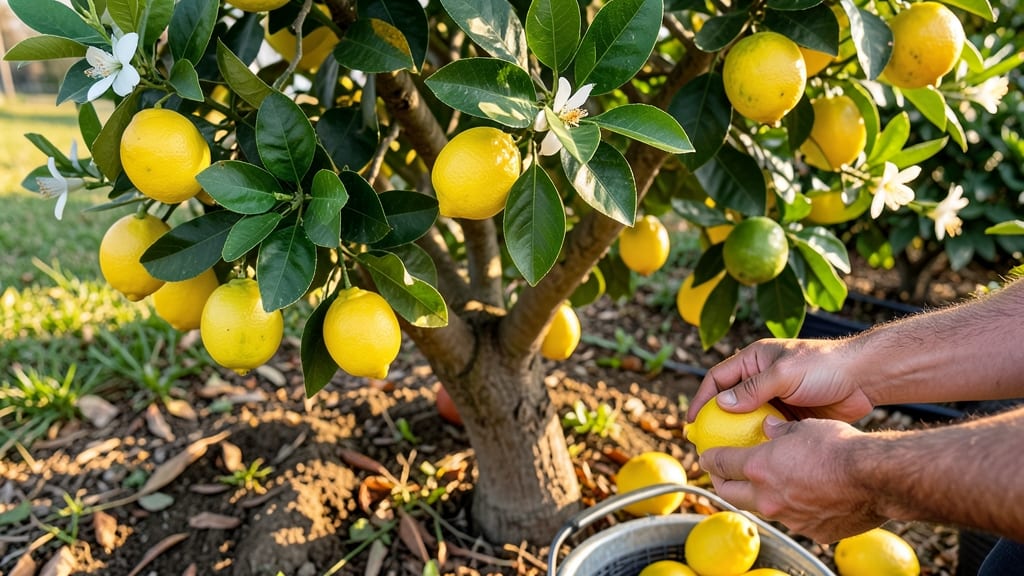
Harvesting lemons at the right time means the difference between a burst of bright, sweet juice and a bland, mealy disappointment.
Picture this: you’ve nurtured your 🍋 lemon tree for months, watching those tiny green fruits swell with promise. But if you pick them too early, they’ll taste sharp and underripe. Wait too long, and they’ll turn dry and flavorless.
The secret? Timing it just right—when the fruit is fully colored, slightly soft to the touch, and releases easily from the tree.
In Zone 9b, where citrus thrives year-round, the best harvest window stretches from late winter into early spring, but visual cues—not just the calendar—are the real game-changer. A deep yellow skin, a heavy feel for their size, and a stem that detaches cleanly all signal peak ripeness.
Miss these signs, and you risk sacrificing that perfect balance of tart and sweet.
Below, I’ll break down the three key visual cues to spot when your lemons are ready, plus how to adjust for indoor vs. outdoor growing and regional tweaks. By the end, you’ll never second-guess whether that lemon is perfect—or past its prime.


3 Visual cues to identify perfectly ripe lemons for harvesting
Harvesting lemons at the wrong time can turn your citrus bounty into a flavor disappointment. Underripe lemons taste bitter and lack juice, while overripe ones become mealy and bland. The key lies in three simple visual cues that reveal peak ripeness.
These indicators work for both container-grown and in-ground lemon trees, ensuring you pick fruit bursting with sweet-tart perfection every time.
Mastering these cues transforms guesswork into confidence—no more tart surprises or flavorless lemons. Whether you're growing Eureka or Meyer lemons, these visual signals apply universally. The earlier you recognize them, the sooner you'll enjoy homemade lemonade, marmalade, or fresh salads with lemons at their peak flavor potential.
- 1. Color Shift: Lemons transition from bright green to yellow (or deep orange for ripe Meyer lemons). Wait until 90% of the fruit shows this color change.
- 2. Peel Texture: Gently press the lemon—ripe fruit yields slightly to light pressure (like a ripe avocado). Overripe lemons feel soft and mushy.
- 3. Stem Detachment: Twist the lemon gently—if the stem pulls away cleanly (without tearing the fruit), it's ready. A stubborn stem means wait a few days.
Don't rely on size alone—some lemons stay small but ripen fully. Instead, focus on the color uniformity across the fruit. A lemon with patches of green needs more time on the tree, while one with even yellow is harvest-ready.
This visual cue is especially critical for Meyer lemons, which often ripen to a soft yellow-orange hue.
The peel texture test is your secret weapon against mealy lemons. A ripe lemon should feel firm but slightly yielding—like pressing your thumb into a ripe peach.
If the skin dents deeply or feels spongy, it's past its prime. This test works best in morning light, when fruit is coolest and firmest.
Watch for the stem separation trick during your weekly harvest checks. A clean break at the stem indicates the lemon has absorbed maximum sugars from the tree. If the stem resists, leave it another 3-5 days—especially in cooler months when ripening slows.
This cue is foolproof for determining juice content and sweetness levels.
Regional climates affect ripening speed—tropical zones produce lemons faster than temperate areas. In Zone 9b, lemons typically ripen in 6-9 months, while colder regions may take up to a year.
Adjust your harvest timeline by 1-2 weeks based on your local frost dates and sunlight exposure.
Pro tip: Harvest in the morning after dew dries—this prevents bruising and preserves peak flavor. Use pruning shears to avoid damaging the tree, and store lemons at room temperature for 2-3 days to enhance sweetness before refrigerating.
This simple routine ensures your lemons stay juicy and vibrant long after harvest.
Remember, patience pays off with lemons. The few extra days waiting for these visual cues mean the difference between sour disappointment and bursting citrus perfection. Once you master these signs, you'll never second-guess your harvest timing again.
🍋
How lemon color changes signal harvest readiness (with variations)
Lemon color shifts from bright green to golden yellow are your best indicators of ripeness. However, not all lemons follow the same timeline—some varieties stay green longer, while others develop orange hues in warmer climates. Understanding these variations ensures you harvest at peak sweetness.
In temperate zones (like California), lemons typically turn fully yellow between 9-12 months after flowering. But in tropical climates (e.g., Florida), they may develop orange undertones earlier due to longer sunlight exposure. Always check peel texture alongside color.
Here’s how to decode lemon color signals for different varieties and regions:
For Meyer lemons, the orange tint signals peak sweetness—wait for it! Meanwhile, Eureka lemons in cooler regions may never turn fully yellow but still ripen when soft to touch. Always pair color checks with the stem twist test for accuracy.
Regional sunlight intensity also affects color. In high-altitude areas, lemons may stay green longer due to cooler temperatures. Conversely, lowland tropical zones accelerate color change. Adjust your harvest timeline based on your local climate’s average last frost date and sunlight hours.
Pro tip: Harvest first thing in the morning when lemons are coolest. This preserves flavor and makes color assessment easier. Store lemons in a paper bag at room temperature to slow further ripening if you’re not ready to use them immediately.
🍋