
Picking
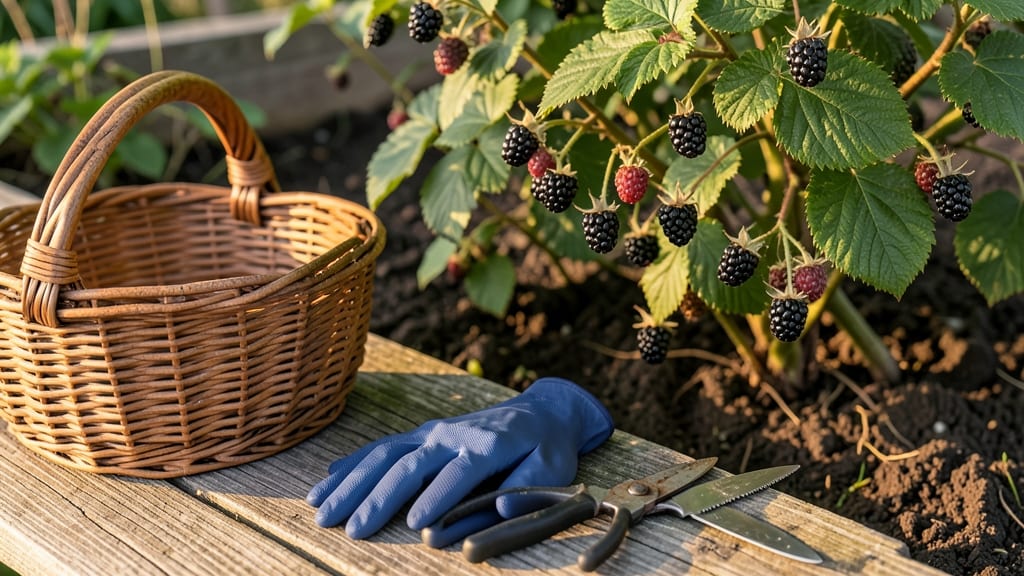
The summer blackberry harvest season transforms your garden from a patch of thorny vines into a bursting bounty of sweet, juicy 🫐 treats—if you catch them at the right moment.
Picture this: you’re reaching for a berry, and it pops off the stem with just a gentle tug, its deep purple-black color gleaming under the sun. That’s the peak ripeness window—when flavor is at its finest, but also when birds and pests are circling.
Miss it, and you’re left with underripe tartness or overripe mush.
Timing is everything, especially in summer’s heat, where ripening speeds up or slows down depending on your region. In Zone 6a, for example, the harvest kicks off in early June, but a sudden heatwave can push it weeks ahead—or stall it entirely.
Knowing the exact color shift and firmness cues means you’ll never waste another trip to the patch.
Below, I’ll walk you through how to spot those ready-to-pick blackberries, the best time of day to harvest, and simple tricks to keep your yield safe from hungry wildlife. No more guessing—just a foolproof summer harvest.


When do blackberry pods change color? The exact stages of summer ripeness
Summer’s blackberry harvest begins with a color transformation that’s easy to miss if you’re not watching closely. Those green pods start their journey in early summer, but the exact timing of their color shift depends on your USDA zone and local temperature.
In Zone 6-7, ripening typically kicks off in late June, while warmer zones like Zone 8-9 may see color changes as early as May. Understanding these stages helps you time your harvest perfectly—before birds or pests beat you to it.
Blackberry pods don’t ripen all at once, which is why daily checks are crucial. The first visible change is a pale green-to-light pink tint on the sun-exposed side of the berry. This subtle shift signals the start of sugar production, but the berries aren’t ready to pick yet.
If you harvest too early, you’ll end up with tart, underripe fruit that lacks the sweetness we all crave. Patience is key—wait for the full color transformation to avoid disappointment.
| Stage | Color Change | Timeframe (US Zones 6-9) | Ripeness Level |
|---|---|---|---|
| Early Green | Solid green | June (Z6-7) / May (Z8-9) | Not ripe |
| Half-Moon | Pink crescent on sun side | Late June (Z6-7) / Early June (Z8-9) | Early ripening |
| Full Color | Deep black/purple | July-August (Z6-7) / June-July (Z8-9) | Peak ripeness |
| Overripe | Mushy, splitting | Late August (Z6-7) / Late July (Z8-9) | Too late |
The half-moon stage is the most critical phase to watch for. When you see a pink crescent (often called the "half-moon") on the side of the berry facing the sun, it’s your first clue that sugars are developing.
This usually appears 2-3 weeks before full ripeness, depending on temperature. Warmer summers speed up this process, while cooler, cloudy summers can delay it by a week or more.
For example, in Zone 6, this stage might appear in late June, while in Zone 9, it could show up as early as mid-May.
Temperature plays a huge role in how quickly blackberries ripen. Ideal ripening temperatures range between 70-85°F. If your summer is hotter than 90°F, berries may overripe quickly and become mushy.
On the flip side, cooler summers (below 65°F) can slow down the color change, stretching out the harvest season. If you’re in a cooler microclimate, like a high-elevation garden, expect the color shift to take longer.
Monitoring your local high and low temperatures helps you predict ripening speed more accurately.
By the time blackberries reach their final color—a deep, glossy black or purple—they’re ready to pick. But here’s the catch: not all berries ripen at once.
Some varieties, like 'Natchez', produce fruit in two waves, with the first batch ripening in early July and a second flush in August. To avoid missing out, check your plants every 2-3 days once the half-moon stage appears.
A quick gentle squeeze test can confirm ripeness—if the berry yields slightly to pressure, it’s ready.
Regional differences matter when planning your harvest. In the Southeastern US, blackberries often start ripening as early as May, while Pacific Northwest growers might not see color changes until late July. Even within the same state, microclimates can shift timing by weeks.
For instance, a valley garden in California might harvest in June, while a coastal garden nearby could be picking in August. Pay attention to local gardening forums or your neighbors’ bushes—they’re a great barometer for your area’s typical ripening schedule.
One of the biggest mistakes I see is picking berries based on color alone. Some varieties, like 'Ouachita', stay reddish-purple even when fully ripe, while others, like 'Arapaho', turn deep black. Always combine color with the firmness
How to harvest blackberries at peak ripeness without losing them to birds
Summer’s blackberry harvest can turn from a frustrating hunt to a bountiful feast—if you know when those tiny green pods transform into juicy, ripe treasures. The secret? Watching for the exact color shift that signals peak ripeness, before birds or pests get there first.
I’ve learned that timing is everything—harvest too early, and you’ll miss the sweetest flavor; wait too long, and you’ll lose your berries to hungry birds or overripe mush.
First, master the finger test for firmness. Gently press a berry—it should yield slightly under pressure, like a ripe peach. If it feels hard, it’s not ready; if it’s mushy, it’s past its prime.
Pair this with the color check: fully ripe blackberries turn a deep, glossy black or dark purple, often with a half-moon of color where the fruit attaches to the stem. This visual cue is your golden ticket to peak flavor.
⚠️ WARNING: Blackberry Harvest Season Summer Pitfalls Birds and pests are aggressive during summer harvest season. If you ignore their presence, you could lose 80% of your crop before it ripens. Here’s the hard truth: Birds target ripe berries first, and once they spot your patch, they’ll return daily.
Without deterrents, your labor is wasted. Start protecting your plants 2 weeks before the first berries ripen—it’s the only way to secure your harvest.
⚠️ WARNING: Blackberry Harvest Season Summer Pitfalls
Birds and pests are aggressive during summer harvest season. If you ignore their presence, you could lose 80% of your crop before it ripens. Here’s the hard truth: Birds target ripe berries first, and once they spot your patch, they’ll return daily. Without deterrents, your labor is wasted. Start protecting your plants 2 weeks before the first berries ripen—it’s the only way to secure your harvest.
Timing your harvest is just as critical as spotting ripe berries. Early morning is the best time to pick—berries are cooler, firmer, and less likely to bruise. Avoid harvesting after rain or in the heat of the day, as this can cause berries to soften too quickly or split.
Use a pair of sharp pruning shears or your fingers to gently twist berries off the stem; never pull or tug, as this can damage the plant and encourage rot.
To keep birds away, I’ve had the most success with organic deterrents. Hang reflective tape or old CDs from branches—they create flashes of light that scare birds without harming them. Another trick? Netting your blackberry patch once berries start to ripen.
Use lightweight, breathable netting that doesn’t smother the plants, and secure it tightly to the ground. If birds are already a problem, try fake owls or predator decoys, but move them every few days to keep birds guessing.
Once harvested, store blackberries properly to extend their freshness. Place them in a single layer on a paper towel-lined tray to prevent moisture buildup, which causes mold. Refrigerate them immediately and eat within 3-5 days for the best flavor.
For longer storage, freeze berries on a tray first to prevent clumping, then transfer them to a sealed bag. This method preserves their texture and sweetness for up to 6 months.
Remember, the key to a successful blackberry harvest is patience and preparation. Spend a few minutes each day checking for ripe berries, protecting your plants, and storing your harvest correctly.
When you finally taste that first perfectly ripe blackberry—juicy, sweet, and bursting with flavor—you’ll know it was worth the effort. Happy harvesting! 🫐