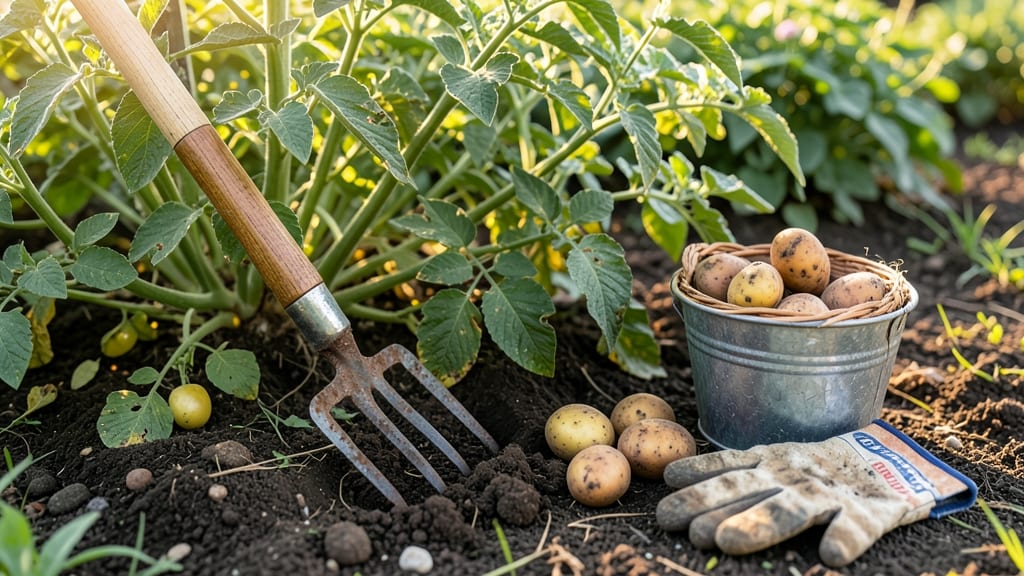
Harvesting potatoes takes how long till harvest potatoes anywhere from 60 to 120+ days, depending on the variety and when you planted them—so timing is everything if you want tubers that are tender, not tough.
Picture this: you’ve been eagerly checking your 🥔 patch for weeks, only to dig up small, underdeveloped potatoes or—worse—miss the window entirely and end up with sprouted, shrunken tubers. The difference between a perfect harvest and disappointment often comes down to knowing exactly when to pull them.
Early varieties like 'Red Pontiac' can be ready in as little as 60 days, while late-season types like 'Russet Burbank' may need 120 days or more. Planting season matters too—spring-planted potatoes need a different approach than those sown in late winter for an early crop.
In this guide, I’ll break down the exact harvest timelines by variety, the key visual cues (like flowering or yellowing foliage) that tell you it’s time, and how to adjust for your climate. No more guessing—just a foolproof plan for digging up the best potatoes of the season.
❌ Not Ready
🟢 Green stem end
🔍 Pale or inconsistent color
📏 Small size (less than 1 inch in diameter)
✓ Pick Now!
🟡 Yellowing and dying back of the plant tops
🟠 Firm, consistent color (not green)
✅ Skin separates easily from flesh when pressed
Potato harvest times by variety: fastest to longest growing seasons
If you're eager to dig into your homegrown potatoes, timing is everything! The harvest window varies wildly between varieties—some are ready in just 60 days, while others need 120+ days to reach peak flavor and size.
Early varieties like 'Red Norland' are perfect for quick harvests, while late-season types like 'Russet Burbank' reward patience with larger yields. Understanding these timelines helps you avoid digging too soon (small, starchy tubers) or too late (sprouting, shriveling).
Skin color also clues you in: red-skinned varieties often mature faster, while white and yellow types tend to be mid-season. Purple potatoes like 'Violet La Ratte' usually fall into the late category, needing extra time to develop their signature hue.
Below, I’ve broken down 12 popular varieties by harvest time, so you can plan your garden for a steady supply all season long.
| Variety |
Days to Maturity |
Skin Color |
Harvest Window |
Best For |
| 'Early Girl' |
60-70 days |
Red |
Late May-June |
New potatoes, quick harvests |
| 'Red Norland' |
70-80 days |
Red |
June-July |
Baking, storage |
| 'Yukon Gold' |
80-90 days |
Yellow |
July-August |
Roasting, mashed potatoes |
| 'Kennebec' |
85-95 days |
White |
July-August |
French fries, storage |
| 'Fingerling' |
75-85 days |
Red/Yellow |
June-July |
Salads, roasting |
| 'Adirondack Red' |
90-100 days |
Red |
August |
Baking, storage |
| 'Blue Congo' |
90-100 days |
Purple |
August |
Unique color, salads |
| 'Russet Burbank' |
110-120 days |
Brown |
Late August-September |
Baking, chips |
'Sweet
When to harvest potatoes based on planting time: spring vs. fall strategies
Timing your potato harvest correctly depends entirely on whether you planted in spring or fall. Spring-planted potatoes follow a straightforward 90-120 day timeline, while fall-planted varieties need a different approach to avoid frost damage. The key is understanding how soil temperature and daylight changes affect tuber development.
For spring-planted potatoes, most varieties reach maturity between late June and August, depending on your last frost date. Fall-planted potatoes, however, require careful planning to ensure tubers don't rot in cold soil.
I'll show you how to calculate exact harvest dates for both scenarios using simple math and visual cues.
Here’s what you need to know to time your harvest perfectly:
- Spring-Planted Potatoes: Count 90-120 days from planting. Early varieties (e.g., 'Red Norland') can be ready in 60-70 days, while late varieties (e.g., 'Russet Burbank') need 110-120 days.
- Fall-Planted Potatoes: Plant 4-6 weeks before your first frost. Harvest 30-40 days earlier than spring-planted varieties to avoid cold soil. Example: If 'Yukon Gold' takes 90 days in spring, aim for 50-60 days in fall.
- Soil Temperature: Harvest when soil temps stay above 50°F (10°C) for at least 2 weeks. Cold soil causes tubers to rot.
- Visual Cues: For new potatoes, harvest when plants flower and small tubers (1-2 inches) form. For full-sized potatoes, wait until foliage yellows and dies back.
- Frost Risk: In cold climates, harvest spring potatoes 2 weeks before the first frost. For fall potatoes, harvest before soil temps drop below 40°F (4°C).
Let’s start with spring-planted potatoes, which are the most common. If you planted in early spring (March-April), most varieties will be ready for harvest between late June and early August.
For example, 'Red Pontiac' (a 60-day variety) might be ready by mid-June, while 'Kennebec' (a 90-day variety) won’t be ready until late July.
For fall-planted potatoes, the goal is to harvest before the first frost. If you’re in Zone 5 or colder, aim to plant by late July or early August and harvest by late September or early October.
This gives tubers enough time to mature without risking frost damage. Use a row cover to extend the season if needed.
Pro tip: Always check soil temperature before harvesting. Cold soil can cause tubers to rot, even if the plants look ready. Use a soil thermometer to confirm temps are above 50°F (10°C) for at least 2 weeks before digging.
Finally, don’t forget about new potatoes—these can be harvested as early as 2-3 weeks after flowering, even if the plant isn’t fully mature. Just gently dig around the base of the plant and look for small, tender tubers about 1-2 inches in diameter.
★★★★★4.9(6 reviews)
|