
How To
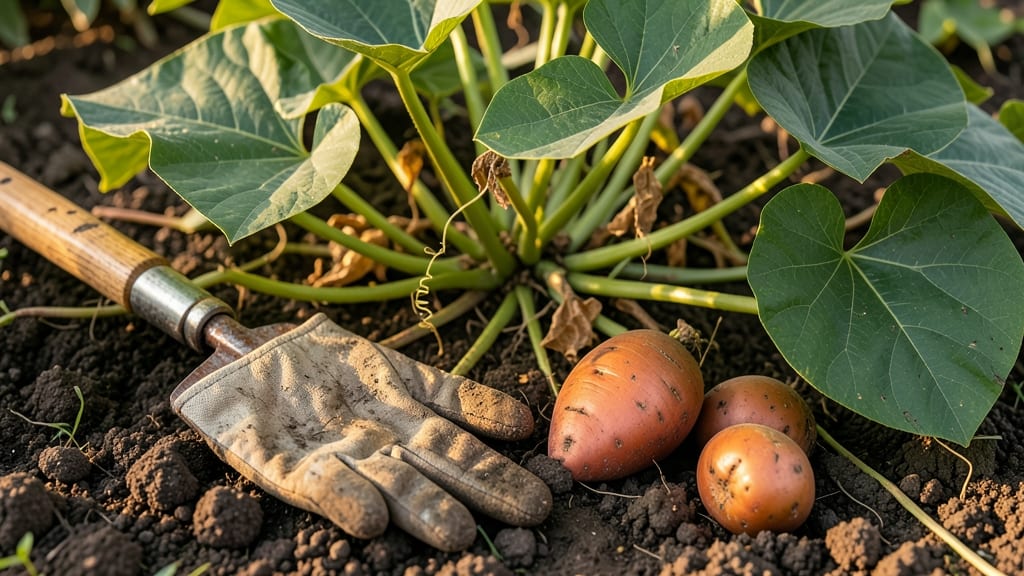
Knowing when to harvest sweet potatoes means watching for foliage dieback and testing soil looseness—two clear signs your 🍠 tubers are ready to pull.
Sweet potatoes are a gardener’s reward—but knowing the perfect moment to dig them up can mean the difference between a tender, flavorful harvest and a tough, woody mess. Miss these key signs, and you’ll either pull them too early (small and underdeveloped) or too late (overgrown and stringy).
Most varieties mature between 90 and 120 days, but heat, soil type, and rainfall can shift that window. Instead of guessing by days, focus on the vines turning yellow and the soil loosening around the roots—those are the real cues.
Below, I’ll break down the exact visual and physical checks you need, plus how to avoid common mistakes that ruin your harvest. Ready to pull the perfect sweet potatoes?


5 Key visual & physical signs your sweet potatoes are ready to harvest
Sweet potatoes thrive when you time your harvest just right, and the plant itself gives you clear signals. Unlike regular potatoes, these tubers don’t form until the vines mature, so watching for foliage changes and soil conditions is crucial.
The moment you ignore these signs is when you risk digging up small, underdeveloped tubers or tough, stringy roots that store poorly.
I’ve learned the hard way that waiting for the perfect harvest window means the difference between a harvest of sweet, tender tubers and a pile of woody, inedible mess. Let’s break down the five foolproof indicators that your sweet potatoes are begging to be pulled from the soil.
🌱 5 Signs Your Sweet Potatoes Are Ready to Harvest
-
1. Foliage Dieback
Vines turn yellow and begin to wilt from the edges inward. -
2. Leaf Color Changes
Leaves shift from deep green to a dull bronze or yellow hue. -
3. Vine Yellowing
Stems lose their vibrant green color and appear brittle. -
4. Soil Looseness Test
Soil around tubers feels loose and dry when gently probed. -
5. Tuber Firmness
Tubers resist pressure when pressed with a thumbnail.
When your sweet potato vines start showing signs of dieback, it’s a clear signal that the plant is redirecting its energy from leaves to root development. This process, called senescence, is nature’s way of telling you the tubers are mature.
The first sign is usually leaf edges turning yellow, which spreads inward until the entire leaf wilts and drops. This happens because the plant stops producing chlorophyll to focus on storing nutrients in the tubers.
Pay close attention to the leaf color changes, as this is one of the most reliable indicators. Healthy green leaves mean the plant is still growing, while a shift to bronze or yellow signals that the photosynthesis process is slowing down.
At this stage, the tubers are typically 3-6 inches long and have developed a thick, protective skin. If you see more than 50% of the leaves turning color, it’s time to start checking for other signs.
The vine yellowing phase is another critical clue. Unlike early morning dew that can make vines look damp, true yellowing is dry and crispy to the touch. This happens because the plant is shutting down its above-ground growth to prioritize root maturation.
If you notice the vines drooping or breaking easily, it’s a strong sign that the tubers are ready. I’ve found that waiting until 70-80% of the vines show this yellowing ensures the best flavor and texture.
Testing the soil looseness around your sweet potatoes is a game-changer. Use a finger or a small trowel to gently probe the soil near the base of the vines.
If the soil feels loose and dry (about 2-3 inches down), the tubers have likely stopped growing and are ready to harvest. This is especially important in heavy clay soils, where tubers can become waterlogged and develop a rough texture. Well-draining soil ensures firm, smooth-skinned sweet potatoes.
Finally, the tuber firmness test is the most direct way to confirm readiness. Dig up one tuber (or gently brush away soil) and press your thumbnail into the skin. If it doesn’t leave a dent and the tuber feels solid, it’s harvest time.
Soft or easily bruised tubers mean they’re not fully mature yet. I always test 2-3 tubers from different parts of the plant to ensure consistency, as some varieties mature faster than others.
One mistake I made early on was waiting too long, thinking the tubers would get sweeter. But overripe sweet potatoes become woody and stringy, with poor storage life. On the flip side, harvesting too early means small, watery tubers that lack flavor.
Aim for the golden window—when the vines are 50-70% yellowed and the soil is loose. This usually falls between 90-120 days after planting, depending on your climate.
Pro tip: If you’re in a short-season area, like Zone 6 or cooler, prioritize the foliage dieback and soil test over tuber size. In warmer zones, you can wait slightly longer for larger tubers, but don’t exceed 120 days or risk tough skins.
Once you’ve confirmed all five signs, grab your garden fork and dig carefully to avoid damaging the tubers.
🍠
How to test for harvest readiness without damaging the tubers (soil & vine methods)
Harvesting sweet potatoes too early means tiny, underdeveloped tubers, while waiting too long risks tough, stringy roots. The key is testing soil looseness and vine maturity without digging up your entire crop. These gentle methods let you check progress while keeping your plants intact.
Start by observing the vine health. When the foliage begins yellowing and dying back—especially in the center of the plant—it signals the tubers are maturing.
This usually happens 90-110 days after planting, depending on your variety. For short-season varieties, this may occur earlier, while long-season types might need extra weeks.
Step-by-Step Harvest Readiness Test
- 🌱 1. Vine Pruning Test
Select a healthy vine and gently pinch off a 6-inch section. If new growth stops within 3-5 days, the tubers are nearly ready. - 💧 2. Soil Looseness Check
Use a garden fork to probe the soil 3-4 inches deep near the plant base. If the soil crumbles easily, tubers are likely well-formed. - 🤲 3. Gentle Pull Test
Grasp a vine and gently tug upward. If the plant resists but the soil loosens slightly, tubers are ready. If it pulls out easily, wait another week. - 🍠 4. Tuber Size Estimate
Dig a small test hole 6-8 inches deep near the plant. If you find tubers 3-6 inches long with firm skin, the rest are likely ready.
For loose, sandy soil, tubers mature faster, so monitor closely. In heavy clay soil, they may take longer to reach harvest size. If your vines are still green and growing vigorously, hold off—your tubers aren’t ready yet.
Once you’ve confirmed readiness, harvest on a dry, sunny day to minimize soil-borne diseases. Use a garden fork to gently loosen the soil around the plant, then lift the tubers carefully to avoid bruising. Avoid washing them immediately, as moisture can cause rot.
Pro tip: If you’re unsure, harvest a few tubers for immediate use and leave the rest in the ground. Sweet potatoes store well in cool, dark conditions (like a root cellar) for months, so you can always come back for the rest.