
Trees
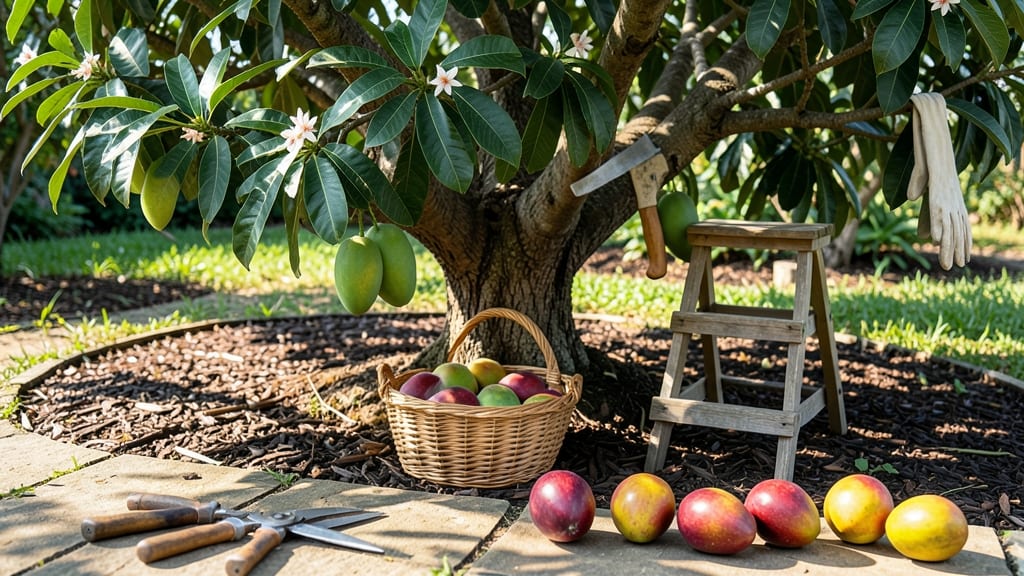
Timing the harvest of your 🥭 mango tree for peak sweetness depends on your climate zone, and getting it wrong can mean the difference between a juicy, flavorful fruit and one that’s bland or mealy.
Picture this: you’ve waited years for your tree to bear fruit, only to pick a mango that’s still hard or falls apart when you slice it. That’s the frustration of guessing harvest time instead of using proven cues.
In this guide, I’ll break down the exact months for your region—whether you’re in frost-free Florida or a cooler subtropical zone—plus the 5 foolproof signs that your mango is truly ready.
You’ll learn how to test ripeness like a pro, avoid common mistakes that ruin flavor, and even extend your harvest season with simple tricks for container-grown trees.


Mango tree harvest time by climate zone: exact months for peak ripeness
Harvesting mangoes at the perfect moment transforms bitter, firm fruit into sweet, juicy perfection—but your USDA zone dictates the exact window. In frost-free zones (10-12), mangoes ripen year-round, while cooler zones (6-9) see harvests clustered in late spring and summer.
Temperature plays a critical role: warmer climates accelerate ripening, while cooler microclimates slow sugar development, sometimes delaying harvest by 4-6 weeks.
Popular varieties like Tommy Atkins and Keitt thrive in subtropical zones (9-11), while Ataulfo (the "creama" mango) prefers tropical zones (10-12). Each cultivar has a unique ripening window, and picking too early—even by 7-10 days—means mealy flesh and underdeveloped flavor.
Below, I’ve broken down the exact harvest months for your zone, plus how to adjust for temperature fluctuations and variety-specific cues.
| USDA Zone | Climate Type | Harvest Window | Best Varieties | Temperature Note |
|---|---|---|---|---|
| 6-7 | Cooler Subtropical | Late June - Early August | Keitt, Tommy Atkins | Slow ripening; needs heat |
| 8 | Warm Subtropical | May - July | Cogshall, Kent | Moderate heat speeds ripening |
| 9 | Hot Subtropical | April - August | Julie, Haden | Extended harvest season |
| 10-11 | Tropical/Subtropical | March - September | Ataulfo, Kent, Tommy Atkins | Year-round ripening possible |
| 12 | Tropical | February - November | Ataulfo, Keitt, Haden | No winter dormancy |
Harvest times shift 1-2 weeks earlier in inland areas vs. coastal regions due to temperature differences.
In USDA zones 6-7, where cool nights slow sugar development, mangoes like Keitt and Tommy Atkins take longer to ripen, often waiting until late June or early August. These varieties benefit from microclimates near heat-retaining walls or greenhouse protection to speed up ripening.
If your tree is in zone 8, expect harvests to start as early as May for Cogshall mangoes, which thrive in warmer subtropical conditions.
For zones 9-11, the harvest window expands dramatically. Julie and Haden mangoes in zone 9 may produce fruit from April through August, while Ataulfo (the creamy-fleshed favorite) in zone 10-11 ripens from March to September.
The key here is monitoring temperature trends: a heatwave in May can push harvests forward by 2-3 weeks, while unseasonal cool spells may delay ripening until late summer
How to test mango ripeness: 5 non-negotiable signs before harvesting
Picking mangoes at the right moment means the difference between a bursting sweet flavor and a bland, mealy disappointment. Unlike many fruits that ripen after picking, mangoes must be harvested at peak ripeness to develop their full aromatic potential.
Even experienced growers sometimes struggle because visual cues vary by variety and climate. Let me walk you through the foolproof method I use every season to guarantee perfect timing.
First, understand that mangoes never ripen fully off the tree—once picked, their sugar content plateaus. That’s why mastering these five ripeness tests ensures you harvest when the fruit is at its sweetest, juiciest, and most flavorful.
Skipping any step risks underripe fruit that’s tart and seedy or overripe fruit that’s mushy. Let’s start with the most obvious clue that often gets overlooked.
Ripe mangoes develop a deep, uniform color—no longer green or patchy. For example, Ataulfo turns golden, while Keitt develops a red blush. Check for consistent color across the entire fruit.
Gently twist the fruit at its stem. A ripe mango will detach easily with a slight tug—no force needed. If it resists, it’s not ready. This test works best in the morning when fruit is firmest.
Press your thumb gently into the mango’s skin. It should yield slightly (like a ripe avocado) but not feel mushy. A hard fruit needs more time; a squishy one is overripe. This is my most reliable test for subtle ripeness.
Sniff near the stem end. A ripe mango emits a fruity, sweet scent—almost like a mix of peach and tropical flowers. If it smells neutral or fermented, it’s past its prime.
Cut a test fruit open (if unsure). The seed should be fully brown and firm, not pale or soft. This confirms the fruit’s internal sugars have fully developed.
Pro tip: Combine these tests for accuracy. For example, a golden Ataulfo might pass the color test but fail the finger test—meaning it needs 2-3 more days on the tree. I’ve learned that morning harvests often yield the sweetest fruit because temperatures are cooler, preserving flavor during transport or storage.
One common mistake I see is relying solely on color. Some varieties like Haden stay greenish-yellow even when ripe, while others like Kent develop a red hue. That’s why the finger test and scent check are non-negotiable for me—they work across all varieties.
Once you master these signs, you’ll never second-guess your harvest timing again.
Remember, mangoes continue to ripen slightly after picking, but only for about 2-3 days. After that, their sugar content declines. So if your fruit passes all five tests, harvest immediately and enjoy the reward of a perfectly ripe mango—sweet, juicy, and bursting with tropical flavor.