
Advice
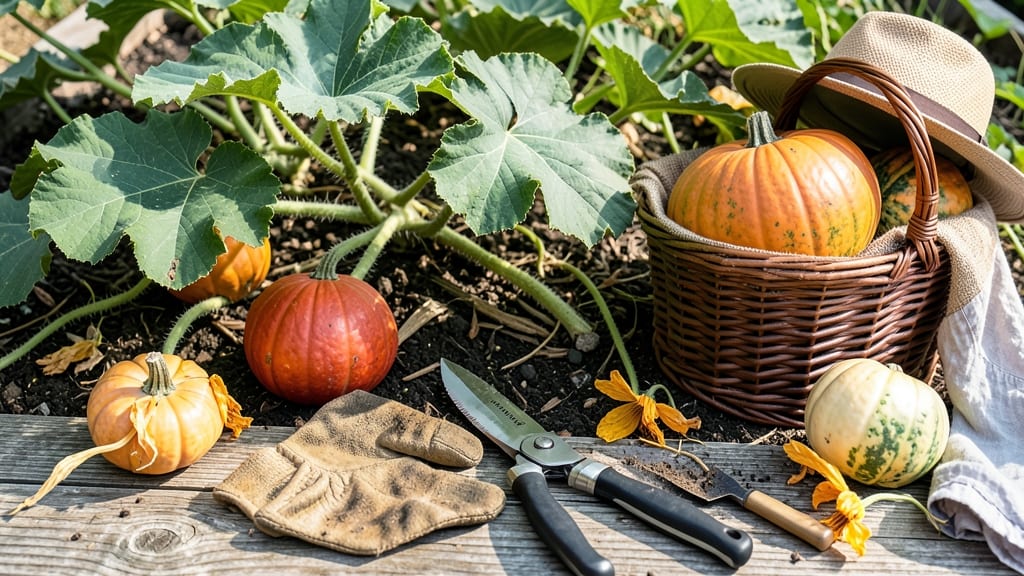
Harvesting pumpkins at the right time ensures they ripen fully and store well—something I learned the hard way after cutting into a rock-hard pumpkin only to find it still green inside.
Knowing the exact pumpkin harvest time can mean the difference between a perfect jack-o'-lantern and a mushy mess—yet many gardeners miss the window. The secret lies in two key signals: stem behavior and skin color shifts.
For most varieties in USDA Zone 6a, late summer to early fall is the ideal window, but regional climate plays a role. A hard rind, a stem that twists easily, and deepened color are your best clues—but what if your pumpkins ripen too early or late?
Below, I break down the stem twist test, color cues, and variety-specific timing, plus how to handle tricky harvests and store your pumpkins for months. Let’s get those 🎃 ready for the season!

When to harvest pumpkins: the stem twist & color shift test
Harvesting pumpkins at the right moment ensures maximum flavor, longer storage life, and fewer rot issues. Most varieties take 85–100 days from planting to harvest, but physical cues—not just days—determine readiness.
The two most reliable indicators? A dry, woody stem and a deep, consistent skin color. Ignore these, and you risk pumpkins that spoil quickly or taste bland.
Timing matters because overripe pumpkins develop soft spots and attract pests, while underripe ones lack sweetness and won’t store well. In my Zone 6a garden, I’ve learned that late August to early October is prime harvest time, but regional frost dates can shift this window by weeks.
For example, northern climates may need to harvest by late September, while southern gardens can wait until October.
Before you grab that pruning shears, test for readiness with these two non-negotiable methods: the stem twist test and the color shift analysis.
Both are foolproof if done correctly. Skip either, and you’re gambling with your pumpkin’s future. Let’s break down how to nail these tests every time.
The stem twist test is your first line of defense. Gently grasp the stem 1–2 inches from the pumpkin and twist firmly. If it snaps cleanly with no green fibers remaining, your pumpkin is ready. I’ve seen gardeners hesitate here, thinking they need to pull harder—don’t.
A clean break means the stem’s woody tissue has fully matured, sealing the fruit’s nutrients. If the stem resists or tears, wait 3–5 days and retest.
Next, examine the skin color. A ripe pumpkin’s color should be uniform and deep. For example, Jack-o'-Lantern varieties shift from pale green to bright orange, while pie pumpkins like Sugar Pie turn a golden tan.
Patchy or uneven coloring signals immaturity. Pro tip: Check the underside of the pumpkin—this area often ripens last. If it’s still light-colored, hold off on harvesting.
Don’t overlook the rind’s texture. A ripe pumpkin’s skin should feel hard and dry, almost like thick cardboard. Run your thumbnail over the surface—if it doesn’t puncture the skin, it’s ready. Soft spots or denting mean the pumpkin needs more time.
I once harvested a Cinderella pumpkin too early because I missed this cue, and it rotted within a week. Lesson learned: Patience pays off.
Watch the vines too. As pumpkins mature, the nearby vines will yellow and die back. This is nature’s way of telling you to act fast. If 50% or more of the leaves on vines near your pumpkin are dead, harvest within 3–5 days to avoid overripeness.
In my garden, I mark vines with flags when they start wilting—it’s a visual reminder to check ripeness daily.
Regional climate variations can shift harvest timing by weeks. In hot, dry climates (like Arizona), pumpkins may ripen 2–3 weeks earlier due to accelerated growth. Conversely, cool, cloudy summers (like Pacific Northwest) can delay ripening by 10–14 days.
Always adjust your harvest window based on local weather. For example, if your area had a cool June, add 7–10 days to the standard 85–100 day
How to check pumpkin ripeness: 5 non-negotiable signs (beyond the basics)
Beyond the basic color change, pumpkin ripeness requires a deeper inspection. I’ve learned that relying solely on orange hues can lead to underripe or overripe pumpkins—both of which spoil faster. The stem twist test and skin hardness are my go-to methods for pinpointing the perfect harvest moment.
For example, a pumpkin with a hard, dry rind that resists your fingernail is far more reliable than one with a slightly softened skin. But what if your pumpkin’s stem snaps instead of twisting?
That’s a red flag for overripeness. Let’s dive into the five signs I swear by to avoid that mushy disappointment.
- 1 Stem Separation Resistance: Gently twist the stem—if it snaps cleanly (not pulls out), the pumpkin is ripe. A stem that resists or stretches means it’s not ready.
- 2 Vines Dying Back: Healthy yellowing vines near the pumpkin signal maturity. If the vines are still green and growing, wait 7–10 more days.
- 3 Skin Hardness: Press your fingernail into the rind near the stem. If it doesn’t puncture, it’s ready. A soft spot means it needs more time.
- 4 Weight-to-Size Ratio: A ripe pumpkin feels heavy for its size. Lift it—if it’s light, it’s likely underripe. Overripe pumpkins may feel hollow when tapped.
- 5 Seed Color Changes: Cut open a small section near the stem. If the seeds are white and the surrounding pulp is orange, it’s ripe. Black or shriveled seeds mean it’s overripe.
I once harvested a pumpkin based on color alone, only to find it still green inside—a classic case of premature harvest. The seed color test saved me from wasting another pumpkin last year. If your pumpkin fails one sign but passes others, wait 3–5 days before deciding.
For overripe pumpkins, the skin may develop soft spots or cracks, and the stem will darken and shrivel. These pumpkins are best used immediately for cooking or composting, as their storage life is drastically reduced. Always prioritize the stem twist test and skin hardness—they’re the most reliable indicators.
Pro tip: Harvest on a dry, sunny morning to allow the cut stem to dry and seal, extending shelf life. Store pumpkins in a cool (50–55°F), dry place with good airflow, like a garage or basement. With these signs, you’ll never miss the window again! 🎃