
How To
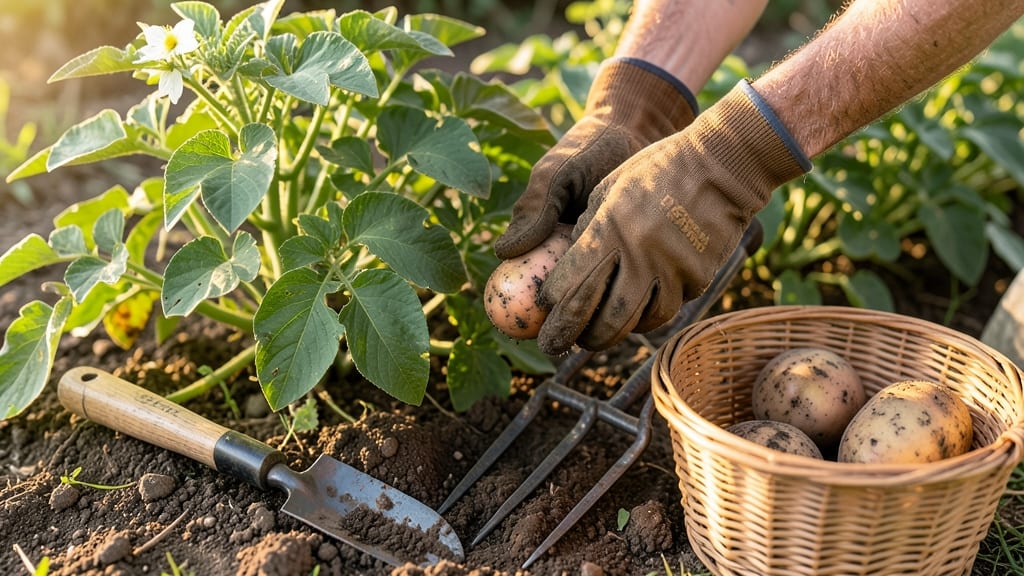
Harvest russet potatoes when the foliage yellows and flowers fade — a 70-120 day window after planting that makes all the difference between meal-sized spuds and sad, shriveled scraps.
Picture this: you’ve spent weeks tending your 🥔 patch, and now the vines are turning crispy brown while the soil feels loose and dry. That’s your cue to grab a fork and dig—because waiting too long means tough, stringy potatoes, and harvesting too soon leaves you with undersized tubers.
Timing isn’t just about days on the calendar; it’s about reading your plants. The key signs—dried stems, firm skins, and easy soil separation—tell you exactly when to stop waiting and start cooking.
Miss these clues, and you might end up with a harvest that’s less than perfect.
In this guide, I’ll walk you through the exact signals to watch for, how to adjust for your Zone 6a climate, and even how to cure your potatoes for storage. No more guessing—just flavor-packed harvests every time.


How to tell when russet potatoes are ready to harvest (key signs)
Timing the harvest of russet potatoes is all about reading your plants' signals. Unlike some crops that rely on strict days-to-maturity, russets give you clear visual cues when they're ready to dig. Ignoring these signs often leads to small, woody tubers or potatoes that spoil too quickly.
The key is watching three main indicators: flower color, stem condition, and soil readiness—each telling a different part of the harvest story.
Most russet varieties take 90-120 days to reach full maturity, but don't rely solely on a calendar. Instead, focus on the plant's natural progression. For example, my russets in Zone 6a often signal harvest readiness in late August, but this shifts based on planting date and weather.
The first clue comes from the flowers, which change color dramatically as the plant shifts energy from blooms to tuber development.
| Harvest Indicator | What to Look For | Action Required |
|---|---|---|
| Flower Color | Flowers fade from purple to brown and dry up | Check soil moisture; harvest in 1-2 weeks |
| Stem Condition | Lower stems turn yellow and die back | Dig when 50-75% of foliage has yellowed |
| Soil Readiness | Top 2-3 inches dry out between waterings | Harvest immediately before soil dries completely |
| Tuber Size | Potatoes reach 3-5 inches in diameter | Dig a test potato to confirm maturity |
| Skin Texture | Skin resists thumbnail pressure (firm but not hard) | Harvest within 3-5 days for best flavor |
The first visual cue is when your russet potato flowers fade from their vibrant purple to a dull brown and begin drying out. This shift happens because the plant redirects energy from blooming to tuber development.
I've found that if I wait too long after this change, my potatoes can become overmature and tough. Instead, mark this moment on your calendar and plan to harvest in 1-2 weeks, giving the tubers time to fully develop their flavor.
Next, watch the stem condition of your russet plants. As the flowers fade, the lower stems will start turning yellow and eventually die back. This is nature's way of telling you the plant is senescing—a natural process where the plant prepares for dormancy.
Aim to harvest when 50-75% of the foliage has yellowed. If you harvest too early, you'll miss out on full-sized potatoes, and if you wait too long, the tubers may sprout or shrivel in the soil.
Don't overlook the soil conditions, which are just as critical as the plant's appearance. Russet potatoes thrive in well-draining soil, and the top 2-3 inches should dry out between waterings as harvest approaches. If the soil stays too wet, your potatoes can develop diseases like rot.
Test soil readiness by sticking your finger an inch into the ground—if it feels dry, it's time to harvest. Pro tip: I always harvest on a dry, sunny day to minimize soil clinging to the tubers.
For new potatoes (small, tender spuds), you can harvest earlier when tubers reach 2-3 inches in diameter. Look for these near the surface of the soil, often just below the top few inches of dirt.
New potatoes are perfect for quick cooking but won't store as long as mature russets. If you're growing for long-term storage, wait until the tubers are 3-5 inches wide and the skin is firm but not hard.
One common mistake is harvesting based on plant height alone. While russet plants can grow 18-24 inches tall, their height doesn't directly correlate with tuber maturity. Instead, focus on the three key indicators we've discussed: flower fading, stem yellowing, and soil dryness.
I once harvested my russets too early because the plants looked tall, only to find tiny, underdeveloped potatoes—a lesson I won't forget!
To avoid damaging your crop, use a garden fork or hands to gently loosen the soil around the base of the plant. Work carefully to prevent piercing the tubers. Once exposed, brush off excess dirt and inspect each potato for firmness and size.
If you find any tubers that are green or shriveled, set them aside for immediate cooking, as they may not store well. Russets are at their peak flavor when harvested at the right moment—don't miss out on that buttery, crispy perfection!
After harvesting, let your russets cure in a dark, dry place for 1-2 weeks to develop their skin and improve storage life. Avoid washing them until you're ready to cook, as excess moisture can lead to rot and spoilage.
With the right timing, you'll enjoy homegrown russets that outshine store-bought in both flavor and texture.
🌱
Early vs. late harvesting: when to dig for storage vs. immediate use
Harvesting russet potatoes at the wrong time can mean the difference between tender new potatoes for quick cooking and storage-quality tubers that last all winter. The key lies in understanding two distinct harvest windows—one for early harvesting (new potatoes) and another for late harvesting (mature tubers).
Each requires different soil conditions, tuber sizes, and post-harvest care.
For short-term use, like roasting or boiling, you’ll want new potatoes harvested when they’re 1–2 inches in diameter—typically 50–70 days after planting. These young tubers are delicate, thin-skinned, and packed with flavor.
But if you’re aiming for long-term storage, wait until the plants fully mature—usually 90–120 days—when tubers reach 3–5 inches and the foliage yellows and dies back.
Early Harvesting (New Potatoes)
- Tender texture for quick cooking
- No curing needed—ready to eat immediately
- Encourages more tubers to form
- Short shelf life (3–5 days)
- Thin skin prone to bruising
- Smaller yield per plant
Late Harvesting (Storage Potatoes)
- Long storage life (4–6 months)
- Thick skin resists bruising
- Larger tubers for better yield
- Requires curing (1–2 weeks)
- Starchier texture (less tender)
- Risk of spoilage if stored improperly
Soil temperature plays a critical role in timing. For new potatoes, harvest when soil temps stay above 60°F—this ensures tender tubers. For storage potatoes, wait until soil temps drop below 65°F and foliage fully dies back.
This cooling signal triggers the tubers to thicken their skins and boost starch content, making them ideal for storage.
If you’re curing potatoes for storage, place them in a cool, dark space (50–55°F) with high humidity for 1–2 weeks. This process hardens the skin and reduces moisture loss. Avoid washing tubers before curing—gentle brushing with a dry cloth is enough to remove dirt.
Store cured potatoes in ventilated containers (like burlap sacks or cardboard boxes) to prevent rot.
Pro tip: If your russet potatoes are planted in containers, harvest new potatoes every 2 weeks starting at day 50. This continuous harvest method maximizes yield and keeps your kitchen stocked with fresh spuds all season long.
Just be sure to handle them gently to avoid damaging their delicate skins.
Timing your harvest correctly isn’t just about size—it’s about flavor, texture, and usability. Whether you’re digging for dinner tonight or storing for winter, paying attention to soil temps, plant signals, and tuber size will give you the best russets your garden can produce. 🌱